📌 This article is also available in Korean. 🇰🇷 [Read in Korean]

While the “Cheonma Tomb” and the “Daereungwon Stone Wall Path”—which immediately come to mind when you think of “Gyeongju Daereungwon”—are certainly worth visiting, just across Taejong-ro, a new cluster of ancient tombs featuring ‘Bonghwangdae’ and the “Geumgwanchong” unfolds.
In the past, the area where Bonghwangdae is located was called the Nodong-ri Tomb Complex, and the area where Geumgwanchong is located was called the Noseo-ri Tomb Complex, but today they have all been consolidated into the “Daereungwon Complex” and are managed as a historic site. So, shall we set out to discover the hidden charms of Gyeongju’s Daereungwon Complex by exploring its outskirts?

[The Hidden Charms of Gyeongju Daereungwon - The Outskirts of Daereungwon]
- From Bonghwangdae and Geumgwanchong to the O'Ar Art Museum
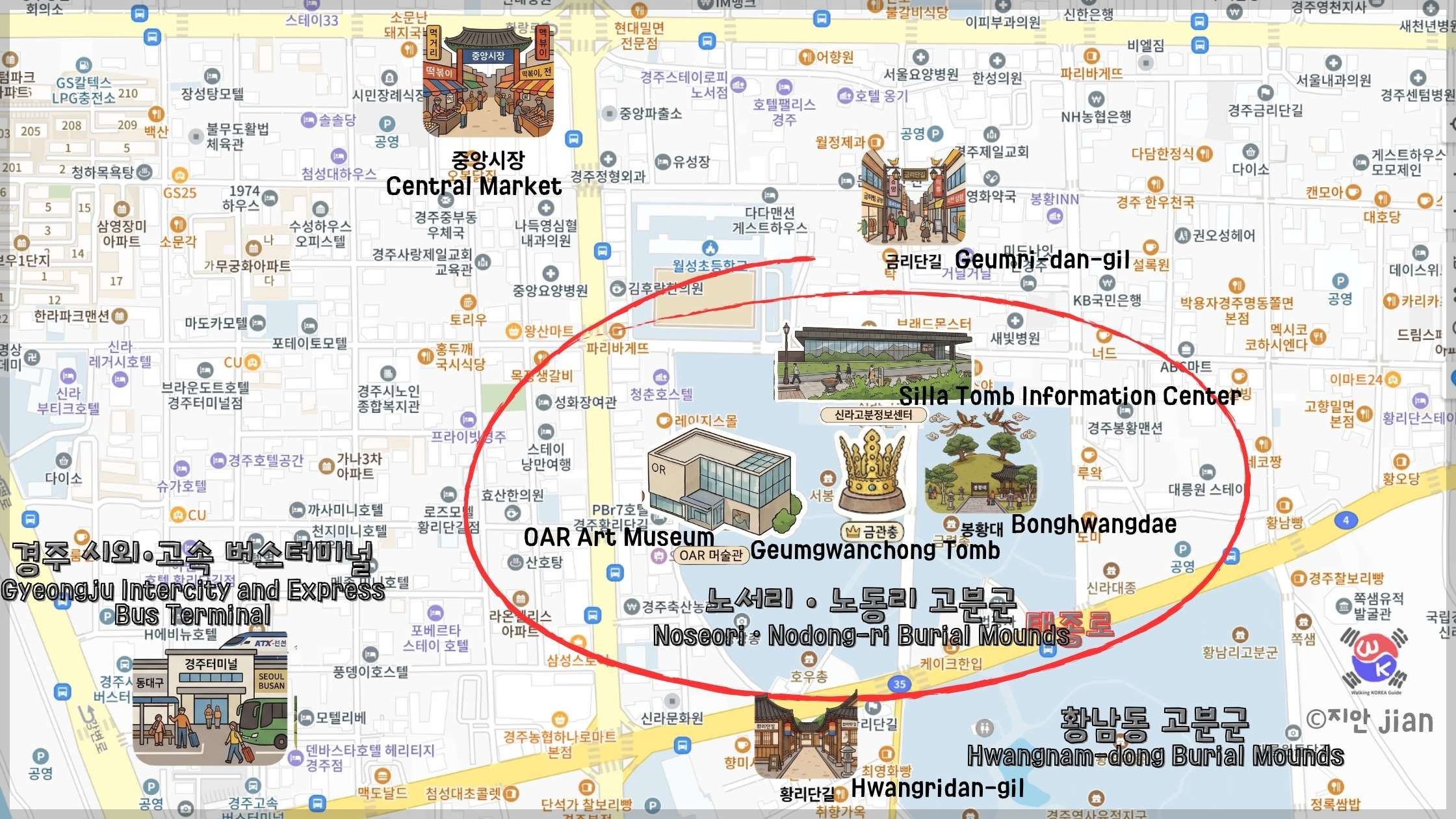
- While the interior of Daereungwon consists of the Hwangnam-dong Tomb Complex, which includes the Cheonma Tomb and the Hwangnam Daechong Tomb, the outer area of Daereungwon comprises the Noseo-ri and Nongdong-ri Tomb Complexes, which feature the Bonghwangdae and Geumgwanchong tombs. (I’ve given them these names to distinguish them from the interior of Daereungwon.)
- The Noseo-ri and Nong-ri Tomb Complexes are sites where “stone-piled wooden chamber tombs” — a burial style unique to the Silla period—are concentrated.
- Adjacent to Geumri-dan-gil (Nodong-dong), an area in the old downtown — Gyeongju City chose the brand name “Geumri-dan-gil” to naturally draw tourists concentrated in Hwangri-dan-gil toward the inner city (Nodong-dong), creating a rhyming pair with the well-known “Hwangri-dan-gil.” I’m really looking forward to seeing how Geumri-dan-gil will evolve in the future.
- The outskirts of Daereungwon offer a hidden gem of a route where you can stroll through the grand history of Silla and naturally transition into the world of contemporary art. Let’s explore everything from the unique silhouette of Bonghwangdae to Geumgwanchong—where the first gold crown was discovered — the Silla Tomb Information Center, which provides insights into Silla tombs, and the OAR Art Museum, the newest hotspot that’s been taking social media by storm.
- Its biggest advantage is that it’s a 10-minute walk from the Gyeongju Terminal, and it offers easy access to nearby attractions such as the Daereungwon Complex (Cheomseongdae and the Daereungwon Stone Wall Path), Hwangridan-gil, Geumridan-gil, Jungang Market, Gyochon Village, and Cheomseongdae.
[Highlights]
A. Bonghwangdae
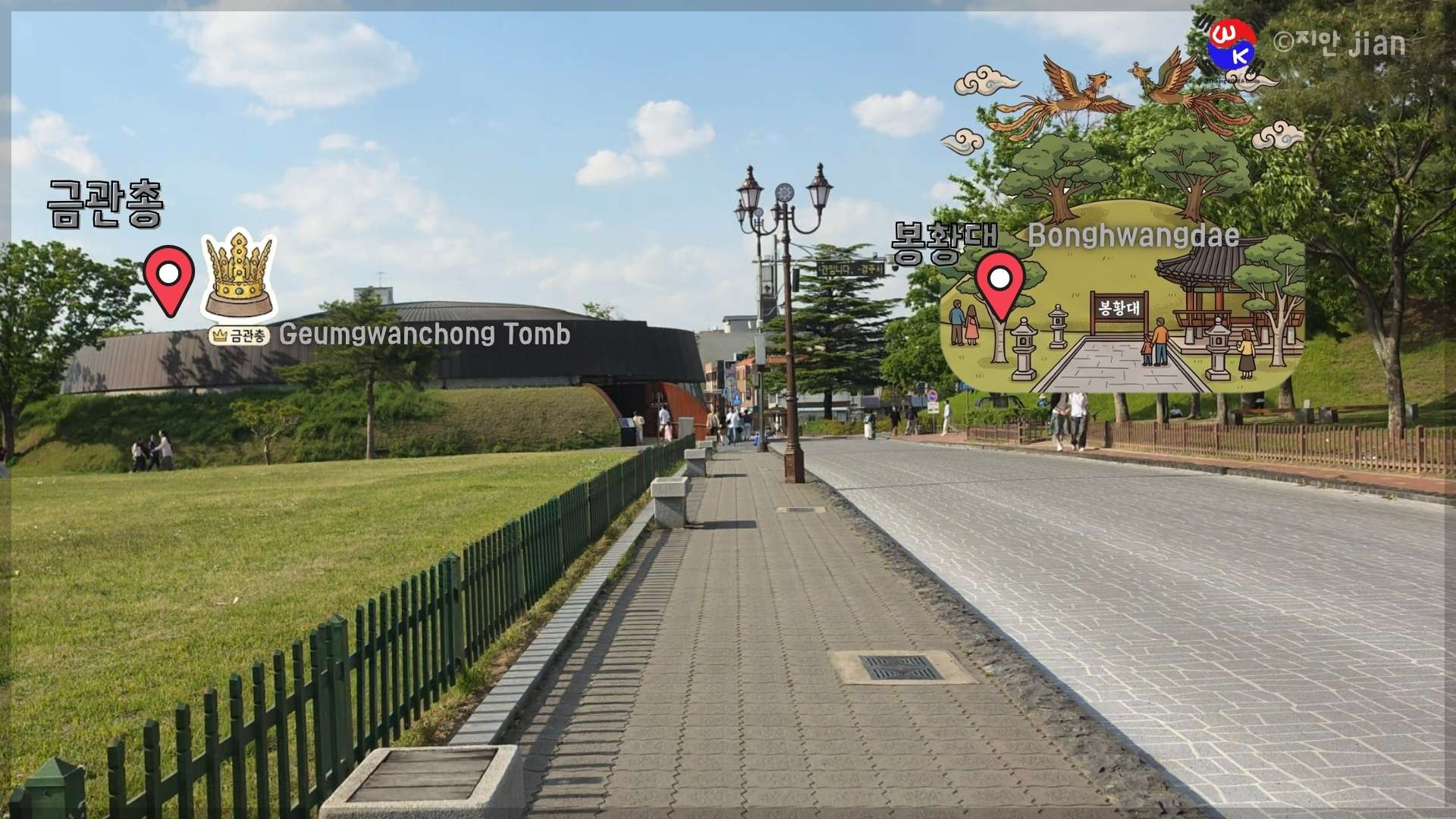
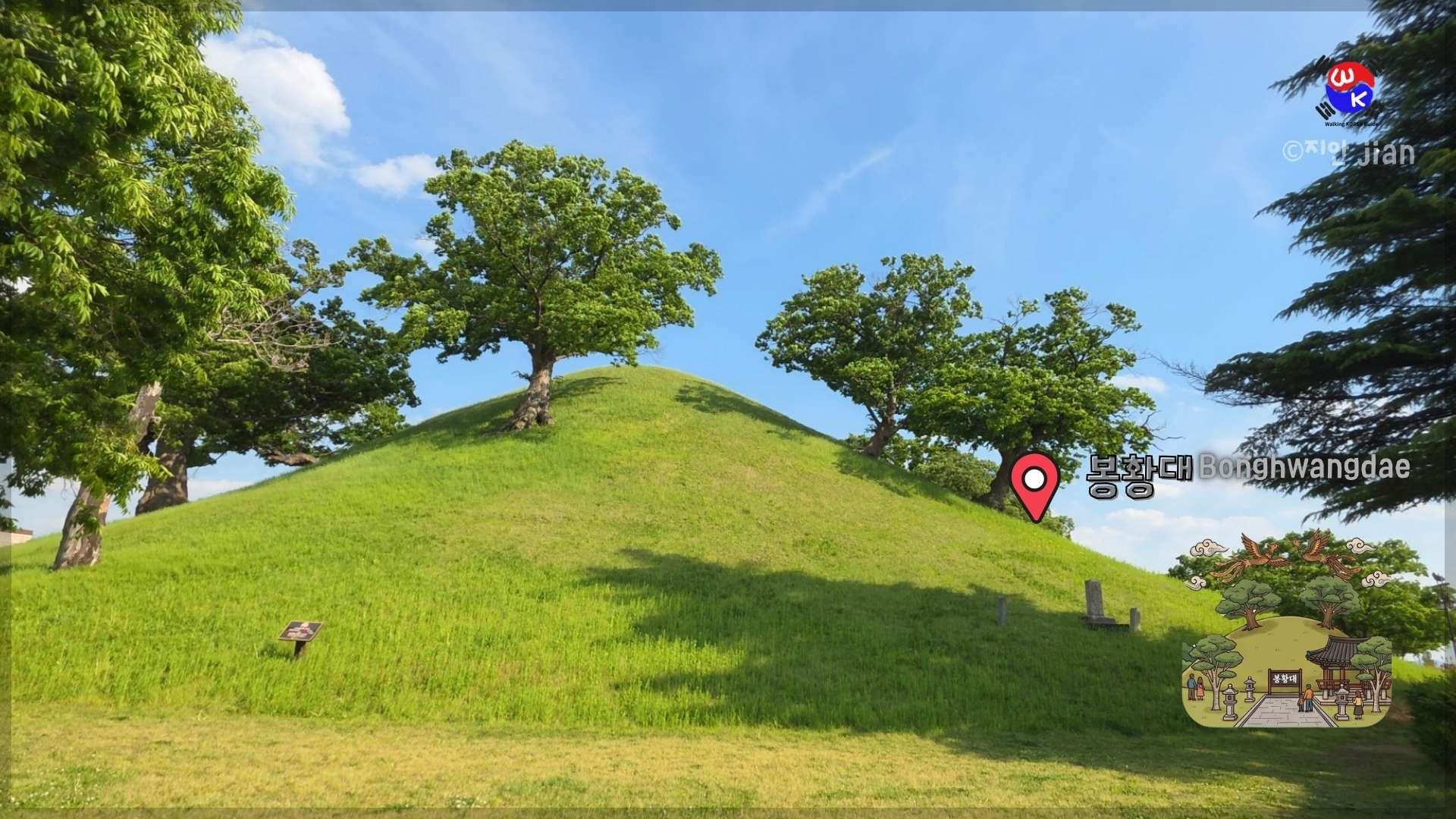
Bonghwangdae: A Green Mountain Rising in the Heart of the City_Bonghwangdae
It is located in the Nodong-ri Burial Mounds
At first glance, this site looks less like a burial mound and more like a small hill nestled in the heart of the city. In fact, people during the Joseon Dynasty also viewed it as a hill rather than a tomb, and it is said they named it “Bonghwangdae,” meaning “the hill where the phoenix rests.”
The Largest Single Tomb on the Korean Peninsula: Standing a staggering 22 meters tall and measuring 250 meters in circumference, this tomb is the largest of its kind in Korea.
The Special Charm of Bonghwangdae—in particular, the mystical scenery created by the centuries-old zelkova trees growing along the ridge of the ancient tombs — is the highlight of the outer trail at Daereungwon. It is a unique landscape found only in Gyeongju and rarely seen anywhere else in the world.
Bonghwangdae Music Square - Every summer (usually Friday evenings) from 8:00 PM (lasts approximately 1 to 1.5 hours). Please check the event schedule on the Gyeongju Cultural Foundation’s official website before visiting. [Link to the Gyeongju Cultural Foundation's official website]
During the day, you can enjoy the refreshing atmosphere created by the lush green grass and majestic trees, and when night falls, soft lighting comes on, transforming the area into a serene spot for night views. It’s a place where simply sitting on the lawn in front of the burial mound, feeling the breeze, and gazing quietly at the scene brings a sense of peace to your heart.
B. “Geumgwanchong” and the “Silla Tomb Information Center”


- The “Geumgwanchong” is the tomb where the first pure gold crown — the artifact that first proved the existence of Silla, the “Land of Gold”—was discovered; hence, the tomb is named “Geumgwanchong.”
- A History of Dramatic Discoveries: In 1921, while construction was underway on an ordinary house in Gyeongju, a flood of gleaming golden artifacts was accidentally unearthed. This was the historic moment when the first “gold crown” was unearthed from a Silla tomb, and the site came to be known as “Geumgwanchong” (Gold Crown Tomb). It is also a place that bears the painful history of the Japanese colonial period, during which the artifacts were not formally excavated but rather salvaged in a manner that bordered on looting.
- Since then, Geumgwanchong has been modernized and now features the On-Site Preservation Exhibition Hall and the Silla Tomb Information Center.
- While visitors can view the interiors of both the Cheonma Tomb and the Geumgwan Tomb, the Cheonma Tomb offers an “analog” experience—allowing visitors to walk directly into the tomb along its earthen walls while preserving the atmosphere of its 1970s excavation — whereas the Geumgwan Tomb embodies a “digital modern” aesthetic, blending contemporary architecture with an archaeological archive.
- The modern “Gold Crown Tomb Preservation and Exhibition Hall” faithfully recreates the interior structure of an actual tomb, providing a highly intuitive view of the cross-section and construction process of the “stone-piled chamber tomb”—a burial style unique to the Silla Dynasty.
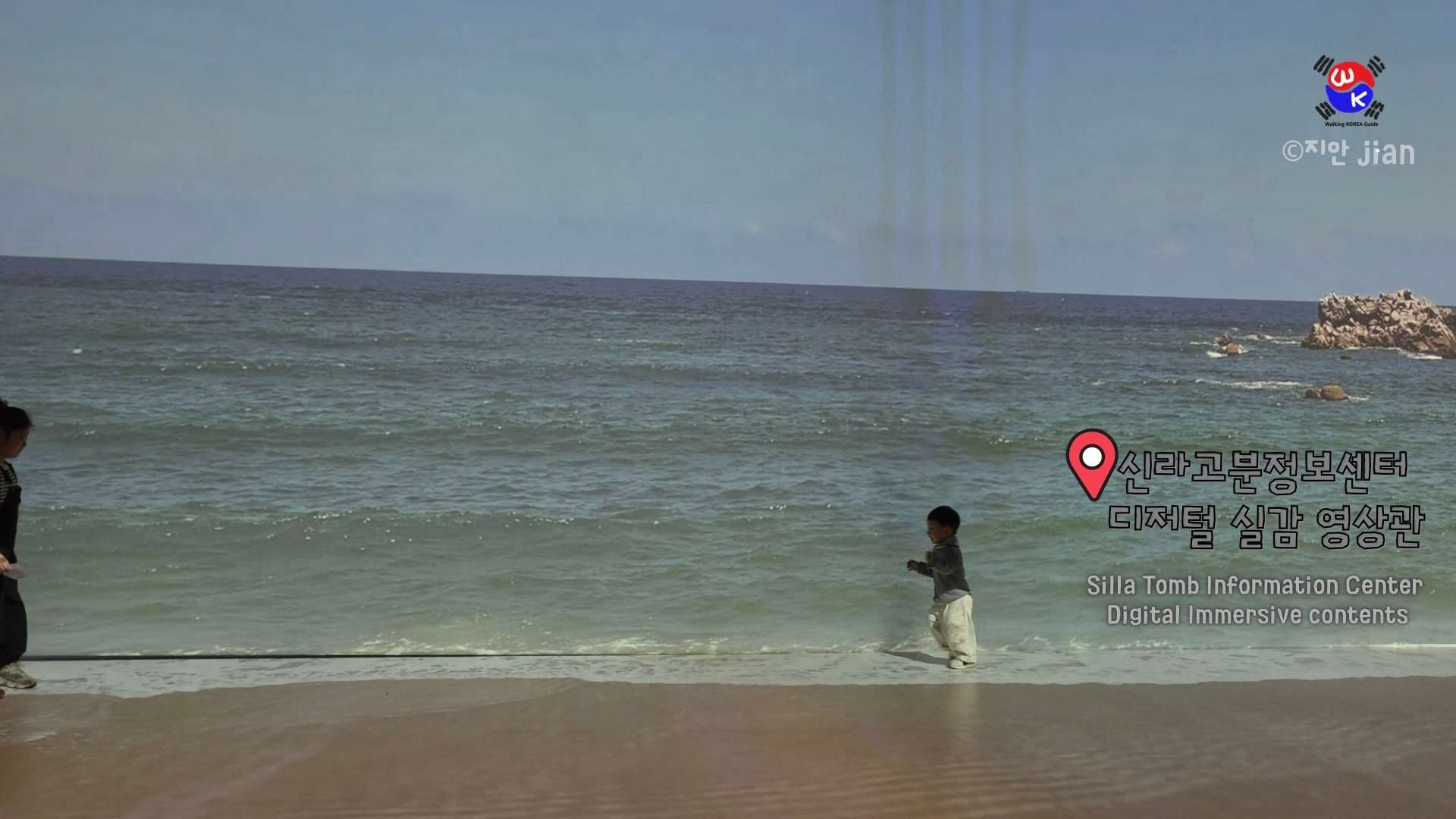
- “Silla Tomb Information Center”—This indoor attraction, featuring stunning media art and a variety of digital exhibits, makes it easy to learn all about the Silla tombs. It comes highly recommended for families traveling with children and history enthusiasts alike. Although it was just a video, watching children playing in front of King Munmu’s Tomb by the East Sea left me deeply moved by the thought that we were sharing the same space with those from the past, transcending time.
- A Single Clue Identifying the Tomb’s Occupant Discovered - In 2013, while the National Museum of Korea was reorganizing and conserving artifacts excavated from the Geumgwanchong Tomb, the inscription “King Isaji” was discovered engraved on a ring-handled sword. This discovery is said to have played a decisive role in narrowing down the tomb’s construction period—and thus the identity of its occupant—to the early 6th century, during the Silla Maripgan era.
- A typical stone-piled wooden-coffin tomb (jeokseok mokgwakbun)—the Geumgwanchong Tomb—is a type of burial structure in which a wooden coffin is constructed above or below ground, the body and burial goods are placed inside, and the structure is then covered with an enormous quantity of river stones, followed by a layer of soil. This structure makes looting nearly impossible, as the stones continuously collapse whenever tomb raiders attempt to dig a hole to enter. This is the reason why the Geumgwanchong Tomb was able to remain intact, preserving its golden artifacts, all the way through the Japanese colonial period.
C. The Breath of Modern Art Infusing a Millennium-Old City: The Ever-Beautiful “OAR Museum”
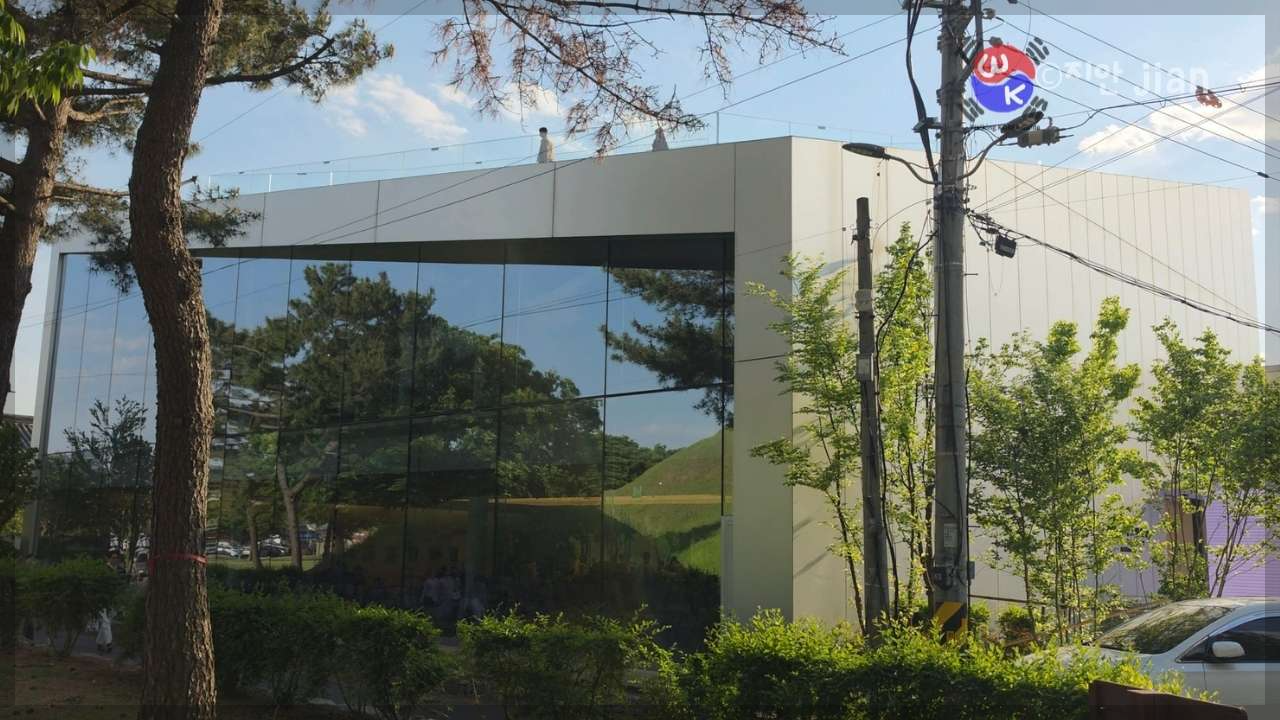

- OAR Contemporary Art Museum: According to Director Kim Moon-ho, the museum’s name is an abbreviation for “The Beauty You Encounter Today.”
- Designed by architect Yoo Hyun-jun, it serves as both a multi-purpose cultural space and a private art museum.
- This modern cultural space offers a place to take a break during your historical tour. The contemporary art exhibition you encounter while strolling through the tranquil ancient burial mounds provides a unique experience.
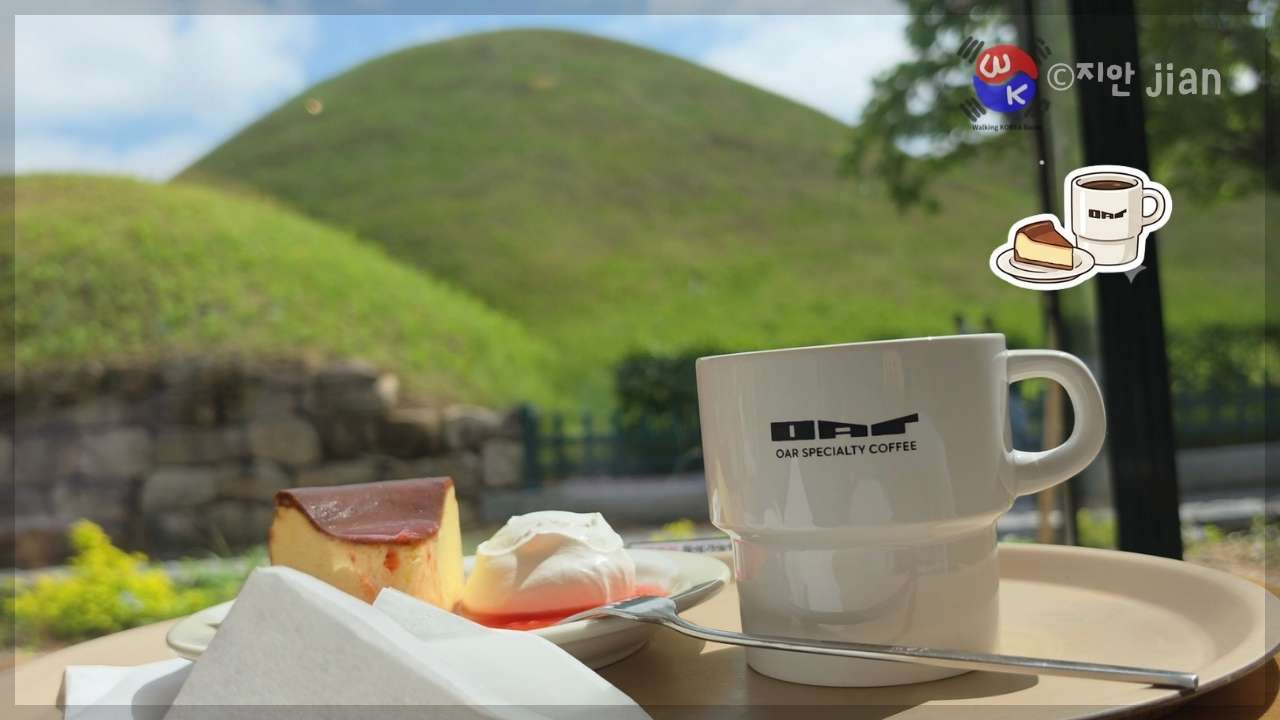
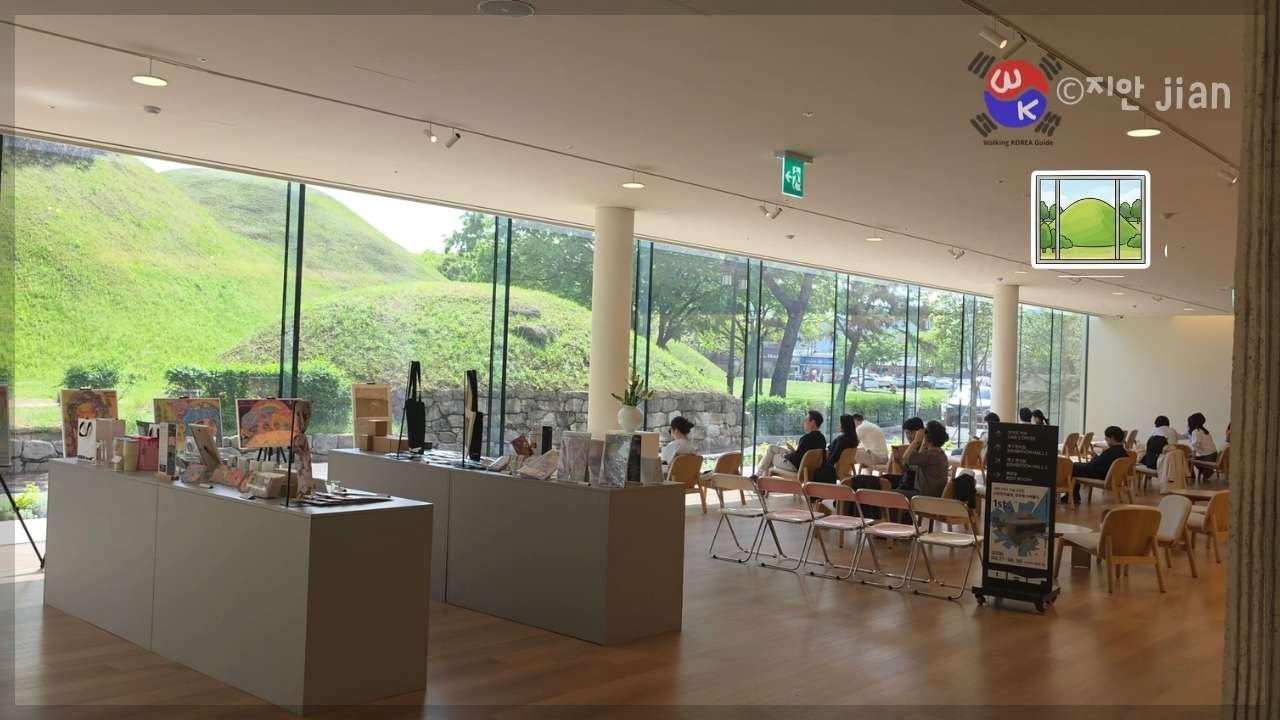
- First Floor – There’s a café where you can enjoy a cup of coffee while admiring the ancient tombs through the floor-to-ceiling windows. The gift shop sells postcards and charming little trinkets that capture the essence of Gyeongju, making it the perfect place to pick out souvenirs. If you’re looking to take a break during your trip to Gyeongju and find some sophisticated inspiration, this is a must-visit spot.
- 2nd Floor - This is a truly unique space where you can experience trendy contemporary art and experimental installation art by promising artists from Korea and abroad. It’s a place that breathes fresh cultural vitality into a traditional Gyeongju tour.
- Currently, from March 21 to August 17, 2026, a solo exhibition titled <<Comma: Empty, Pause, Fill>> by Choi Young-wook, the internationally acclaimed artist known for his “moon jars,” is underway.
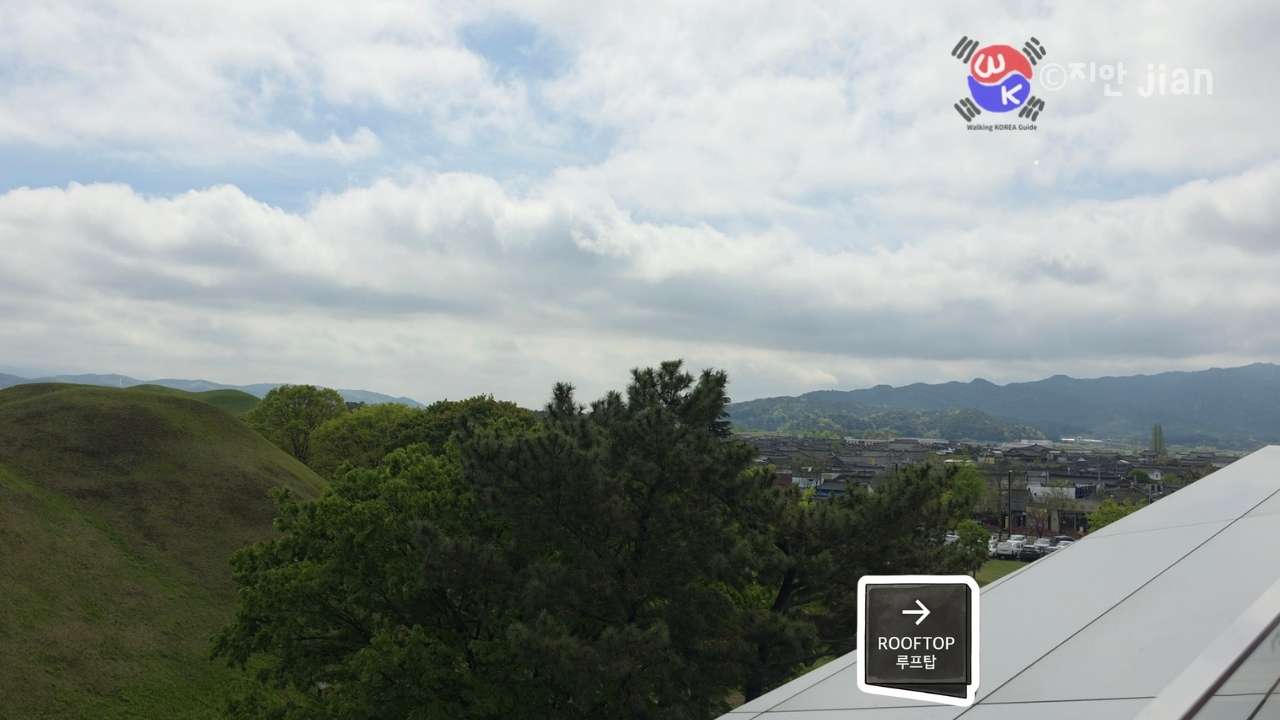
- Rooftop - From the rooftop observation deck, you can enjoy a panoramic view of downtown Gyeongju and the surrounding hills, both large and small.
- The Charm of the Space: The greatest appeal of the Oar Museum lies not only in the exhibited works but also in the “space itself.” Through the museum’s large floor-to-ceiling windows, the tranquil hanok roofs and stone walls of Gyeongju, along with the gentle ridges of Daereungwon, are framed as if in a giant picture. The strange coexistence of past and present that one feels while viewing the exhibits and gazing out at Daereungwon is a special experience unique to this place.
[Visitor Information : Admission Fees, Parking, Hours of Operation, Travel Tips]
| Geumgwanchong Tomb | OAR Art Museum, Gyeongju | |
| 📍 Location/Address | 15 Bonghwang-ro, Gyeongju-si, Gyeongsangbuk-do (Noseo-dong) | 260-6 Geumseong-ro, Gyeongju-si, North Gyeongsang Province (Noseo-dong) |
| 💰 Admission Fee | Adults: 3,000 won / Teens: 2,000 won / Children: 1,500 won *When you purchase an admission ticket to the Brass Tomb Preservation Exhibition Hall, you can also visit the Silla Tomb Information Center right next door. |
Adults: 8,000 won / Children: 5,000 won / Seniors (65 and older): 5,000 won (Proof of eligibility is required to receive the discount) |
| ⏰ Hours of Operation | 9:00 a.m.–6:00 p.m., open year-round | 10:00 a.m.–7:00 p.m. (Last admission at 6:30 p.m.) Closed: Every Tuesday, and on Lunar New Year’s Day and Chuseok |
| 🅿 Parking Information | There is a parking lot in front of the Silla Tomb Information Center, but it is very small. We recommend using the nearby public parking lot. | Private parking lot located behind the museum (1 hour of free parking for museum visitors; an additional hour provided when using the on-site café) |
| 📸Nearby Attractions | Cheonmachong Tomb, Daereungwon Stone Wall Path, Hwangridan-gil, Geumridan-gil, Gyocheon Village, Cheomseongdae, Wolseong, Donggung Palace and Wolji Pond, Gyeongju National Museum | |
| 🚌 How to Get There | ▪ Recommended Buses Upon Arrival at Gyeongju Station via KTX or SRT ㆍ Take Buses No. 50, 51, 70, or 700 and get off at the Seorabeol Intersection, Hwangridan-gil, or Jungang Market bus stops (The bus ride takes about 20 minutes) ▪ If arriving at the terminal via express or intercity bus, we recommend walking (It takes about 15 minutes to reach Daereungwon) *The excellent accessibility to the Gyeongju Bus Terminal is a major advantage for travelers. |
|
💡 Recommended Itinerary (The Ultimate Daereungwon Tour)
Bonghwangdae ➡ Geumgwanchong Tomb, Silla Tomb Information Center ➡ O'Ar Art Museum ➡ A leisurely stroll along Hwangridan-gil ➡ Tour of Daereungwon (Tomb of King Michu, Hwangnamdaechong Tomb, Cheonmatong Tomb) ➡ Gyochon Village, Woljeonggyo Bridge ➡ Night views of Cheomseongdae and Donggung Palace and Wolji Pond
💡 It’s about a 2–3-minute walk from Bonghwangdae to the O’Ar Art Museum, and a 15–20-minute walk from Daereungwon to Cheomseongdae or Donggung Palace and Wolji Pond. Walking from Cheomseongdae to Donggung Palace and Wolji Pond at sunset completes the perfect Gyeongju night view tour. (You can also walk in the opposite direction.)
💡 If you enjoy walking, we recommend exploring on foot since all the nearby attractions are within walking distance. The area is quite large, so be sure to check your destination on the map (the Daereungwon map above).
[ Information on Local Restaurants ]
| Business Name | Signature Dishes | Location | Business Hours | Contact Information |
| Park Yong-ja’s Gyeongju Myeong-dong Jjolmyeon (박용자경주명동쫄면) |
🍴Spicy Noodles with Tofu, Spicy Mixed Noodles (유부쫄면, 비빔쫄면) |
📍3, Gye-rim-ro 93beon-gil, Gyeongju | ⏰11:30 a.m.–7:30 p.m. Closed every Tuesday and Wednesday |
📞054-743-5310 |
| Daehwa Mandu Main Store (대화만두 본점) |
🍴Fried dumplings, meat dumplings, mixed dumplings, chewy noodles (튀김만두, 고기만두, 비빔만두, 쫄면) |
📍7 Gye-rim-ro 93beon-gil, Gyeongju | ⏰ 11:00 a.m.–8:30 p.m. Break time: 3:00–4:00 p.m. |
📞054-772-9972 |
| Chunghyo Chicken Restaurant (충효닭집) |
🍴Fried Chicken, Spicy Sweet Chicken (후라이드, 닭강정) |
📍5 Wonhyo-ro 51beon-gil, Gyeongju | ⏰10:00 a.m.~ | 📞054-749-1743 |
| Hwangnam Bread (황남빵) |
🥮 Hwangnam Bread (황남빵) |
📍783 Taejong-ro, Gyeongju | ⏰8:00 a.m.–10:00 p.m. | 📞054-749-7000 |
💡 The dumplings at Daehwa Mandu’s main branch are truly delicious. The meat dumpling filling blends meat and vegetables perfectly, with a rich, savory flavor from the meat and vegetables that keeps you coming back for more.
💡 The bibim jjolmyeon at Park Yong-ja’s Gyeongju Myeongdong Jjol featured a mild, non-spicy sauce and a unique topping of a generous pile of perilla leaves. The yubu jjolmyeon had a visual presentation I’d never seen before, which was fascinating, and the jjolmyeon noodles, softened in the rich, piping-hot broth, were a real treat.
💡 Chunghyo Dakjip is a popular chicken restaurant near Gyeongju Central Market. Their boneless dakgangjeong is the signature dish, and the fried chicken is delicious too. It’s a place I always pick up takeout from whenever I visit Gyeongju—I even order it for delivery to my home. Nationwide delivery is available exclusively for the dakgangjeong menu.
💡 Since these places are so famous, there may be a wait. I recommend calling Chunghyo Chicken in advance to place an order before you go.
💡 Please note that this restaurant information is based entirely on my personal taste. I’ll continue to add more recommendations as I visit and review other great restaurants.
[ In Closing: A Timeless Landscape That Remains by Our Side Throughout Life ]
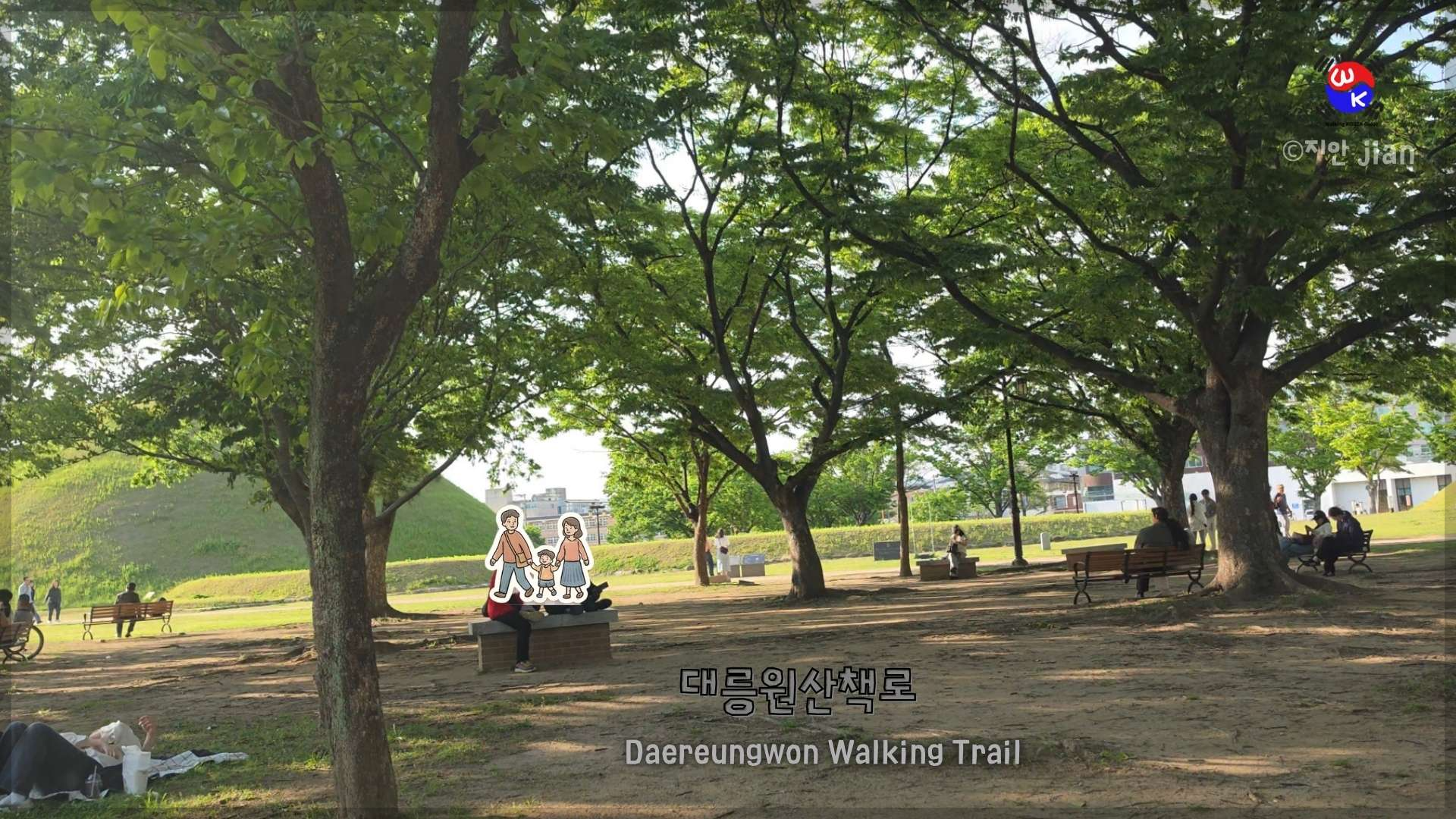
- What makes Gyeongju special is that its historical sites aren’t located far away — they’re always right there, breathing life into everyday life.
- In fact, as you stroll along the walking paths of Daereungwon, you’ll often see people spreading out a mat near the ancient tombs to leisurely read a book or sitting under a tree to relax. This place has long served as a haven and a source of healing for the citizens of Gyeongju. It’s a place I’d definitely like to visit again — not as a tourist rushing to check off famous sights, but as a traveler with the leisure to linger.
- If you’re planning a trip to Gyeongju, why not take a stroll along the special walking route at Gyeongju Daereungwon, which perfectly combines history, art, and a trendy vibe?
- Thank you for reading my second post introducing Gyeongju. In the next installment, I’ll cover Gyeongju Gyochon Village, Wolseong, Cheomseongdae, and Donggung and Wolji.
📌 [ Watch the video of Daereungwon in Gyeongju ]